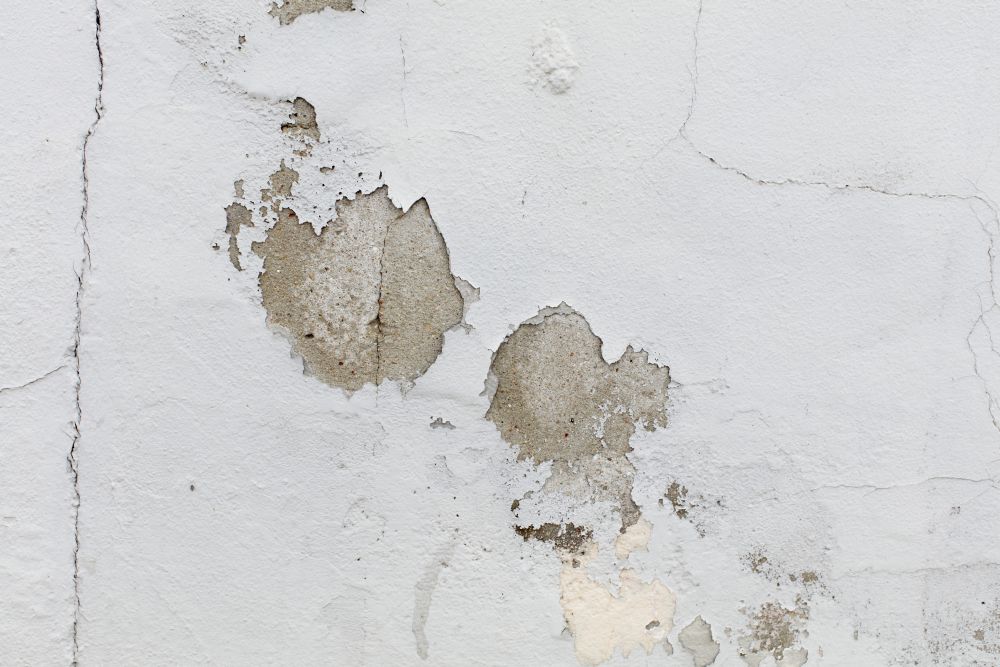
A damp wall is a message written in a language most people misread. The paint bubbles, a tide mark creeps upward, a patch of mould returns a month after it was scrubbed away, and the usual response is a fresh coat of paint. Paint is not the answer because water seepage in walls is a symptom with at least five different causes. Where the mark sits, what shape it takes and when it darkens will usually tell you which one you are dealing with.
Stain One: A Band Along the Skirting
A horizontal band of damp at the foot of a ground-floor wall, often with a crust of white salts, suggests moisture drawn up from the ground through the masonry. It tends to stay below about knee height and worsens in prolonged wet weather. Check outside first: soil or paving piled against the wall, a planter built hard up to it, or a blocked perimeter drain will all feed it. Remove the source of water before considering any chemical treatment.
Stain Two: A Patch That Follows the Rain
If a blotch on the inside of an external wall darkens within hours of a storm and fades over the following days, rain is getting through the outer face. Hairline cracks in render, failed sealant around window frames, perished joints between precast panels and unsealed holes left by old brackets are the usual entry points. Wind-driven rain in this climate strikes one elevation harder than the others, so compare the affected wall with the direction the weather normally comes from.
Stain Three: Damp That Ignores the Weather
A patch that grows steadily whether or not it rains almost always means a pipe. Concealed supply lines under pressure leak continuously; waste pipes leak only when a basin or shower is used. Turn off every tap, read the water meter, and read it again an hour later. Movement on the dial with nothing running is strong evidence. A wall backing onto a bathroom or kitchen is the prime suspect, and the wet area’s own waterproofing may be at fault.
Stain Four: The Mark Beneath Someone Else’s Floor
In flats, damp high on a wall or at the junction with the ceiling frequently originates in the unit above, where a bathroom floor membrane has aged or a pipe joint has opened. The water travels through the slab and down the wall. Resolving it requires access to the upper unit and cooperation between neighbours, and the building’s managing body can often help arrange an inspection. A wall and ceiling leak specialist can confirm the path with moisture readings before anyone starts hacking tiles.
Stain Five: Mould in the Cold Corner
Not every wet wall has a leak behind it. Black speckled mould in a corner behind a wardrobe, on a wall shared with a heavily air-conditioned room, or around a cold-air outlet is usually condensation: humid air meeting a chilled surface. The plaster beneath is often dry when probed. Moving furniture off the wall, improving ventilation and moderating the thermostat do more here than any sealant, and mistaking it for seepage leads to costly, pointless repairs.
Confirming the Suspect
Observation narrows the field; instruments settle it. A pin or capacitance moisture meter maps how wet the wall is and where the reading peaks. Thermal imaging shows cooler, damper zones and can trace a pipe run. Dye introduced into a suspect drain, or a controlled ponding test on the floor above, proves a path beyond argument. Ask for the readings and images to be included in the report, so the diagnosis can be checked and the repair later compared against it.
Remedies Matched to Each Culprit
Each culprit has its own remedy. Rain penetration calls for crack repair, renewed sealant and a breathable water-repellent or elastomeric coating outside. A leaking pipe must be exposed and replaced or relined. Failed wet-area waterproofing is properly cured by lifting the finishes and laying a new membrane, though non-invasive treatments exist for lighter cases. Fine cracks carrying water through concrete can be sealed by injecting resin grout under pressure until the void is filled.
Why Room-Side Coatings Fall Short
Waterproof paint or a cement coating applied to the room side of a wet wall hides the stain and traps the water. Moisture then builds within the masonry, salts crystallise beneath the new surface, and within months it blisters or the damp emerges further along. Internal coatings have a role once the source has been stopped, as a finishing step. Used first, they postpone the problem and make the eventual repair larger.
Letting the Wall Dry Out
Masonry releases water slowly. After the source is cured, a saturated wall can take weeks to dry, longer if it is thick or the room is closed up. Redecorating too soon seals moisture in and the new paint fails. Strip loose plaster affected by salts, keep air moving, and take meter readings at intervals until they stabilise at the level of an unaffected wall nearby. Only then replaster with a suitable mix and repaint.
Choosing a Course of Action
Start by matching your stain to one of the five patterns and writing down when it changes. Stop any obvious source yourself: clear the drain, move the planter, report the upstairs bathroom. For anything concealed, commission a diagnosis with readings before accepting a quotation, and be wary of a fixed remedy offered without one. Treated in that order, water seepage in walls is cured once at its origin instead of being painted over each year.